
Urinary disorders in men
Urinating without discomfort: identify the cause and take action
Understanding urinary problems: weak stream, or nighttime urination. Professor François Haab offers a comprehensive assessment and tailored treatments.
Introduction
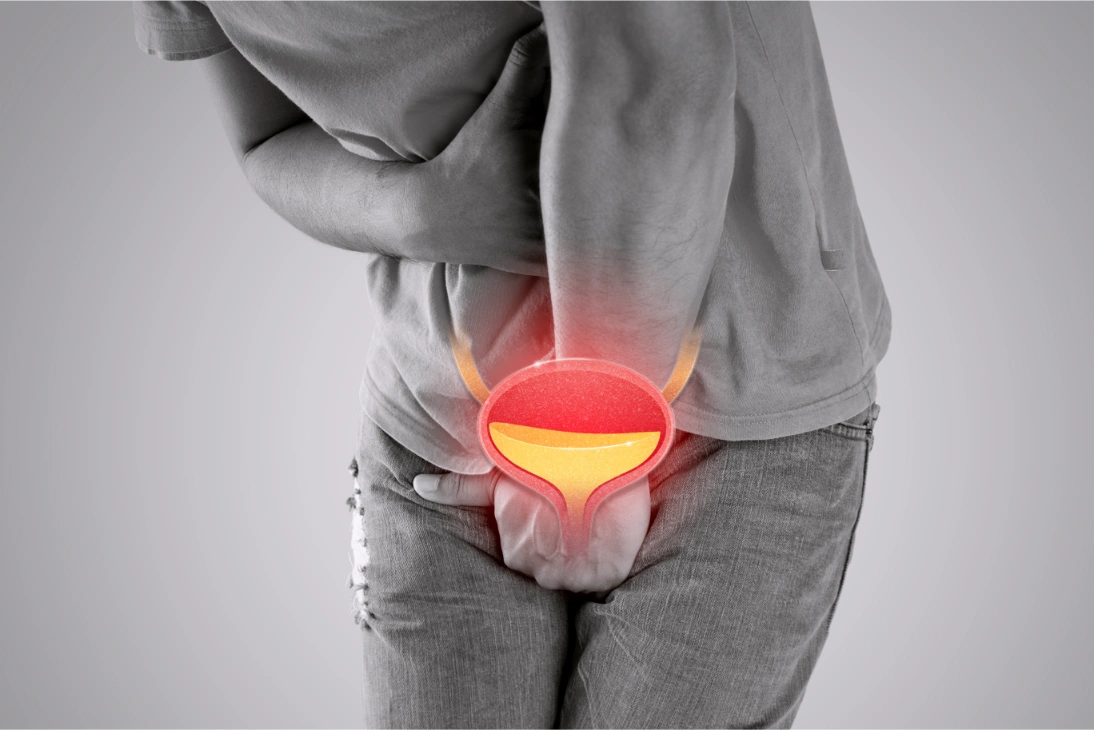
Urinary disorders, or voiding dysfunction, encompass a variety of symptoms that affect bladder emptying or the quality of the urine stream . These can manifest as a weak or intermittent stream, difficulty urinating, frequent nighttime awakenings, or a feeling of heaviness or blockage. These disorders can be a sign of prostate or bladder problems, or other alterations of the urinary tract. A complete urological evaluation is often necessary to identify the cause and determine the appropriate treatment.
Symptoms and clinical forms
Expertise in male urinary disorders
Possible causes and mechanisms
Diagnosis
Expertise
Enlarged prostate: why size isn't the problem | Professor François Haab
Possible treatments
Why consult Professor Haab?
Experience
Prostate problems: is surgery always necessary?
Career Path Firm
Each patient benefits from personalized support, from the initial consultation to post-treatment follow-up. The process includes a thorough assessment, a clear presentation of the various treatment options, and a gradual approach tailored to each individual’s situation.
Are you suffering from urinary problems?
Don’t let urinary problems impact your well-being and intimate life. Professor François Haab practices in Paris and supports you at every stage of your journey, with scientific rigor and compassionate care. Urology Clinic Paris Opéra – Paris 17th Arrondissement. In-person or teleconsultation available. Book your appointment today.
FAQ – Frequently Asked Questions
What are the signs of urinary problems in men?
Typical symptoms include a weak urine stream, difficulty starting urination, repeated nighttime awakenings (nocturia), urgency, and a feeling of incomplete bladder emptying.
Is prostate adenoma still the cause?
This is the most common cause after age 50, but not the only one: overactive bladder, urethral stricture, or neurological disorders can produce similar symptoms. Furthermore, prostate size isn’t the only factor: a small prostate can be very obstructive.
What assessment has been carried out?
The assessment includes an interview with a voiding diary, uroflowmetry (measurement of urinary stream force), ultrasound with post-void residual measurement, and PSA testing as part of screening. A complete urodynamic evaluation is sometimes necessary.
Is surgery always necessary?
No. Many patients find relief through lifestyle changes and medication. Surgery is only considered if medical treatment fails or if complications arise, and today there are techniques that preserve ejaculation in the majority of cases.
Pr François Haab's expertise
Chirurgien Urologue à Paris

Urinary disorders in men: there are solutions.