
Urinary incontinence in women
Effective solutions for every type of leak
Discover the causes of urinary incontinence in women and solutions to improve quality of life.
Introduction
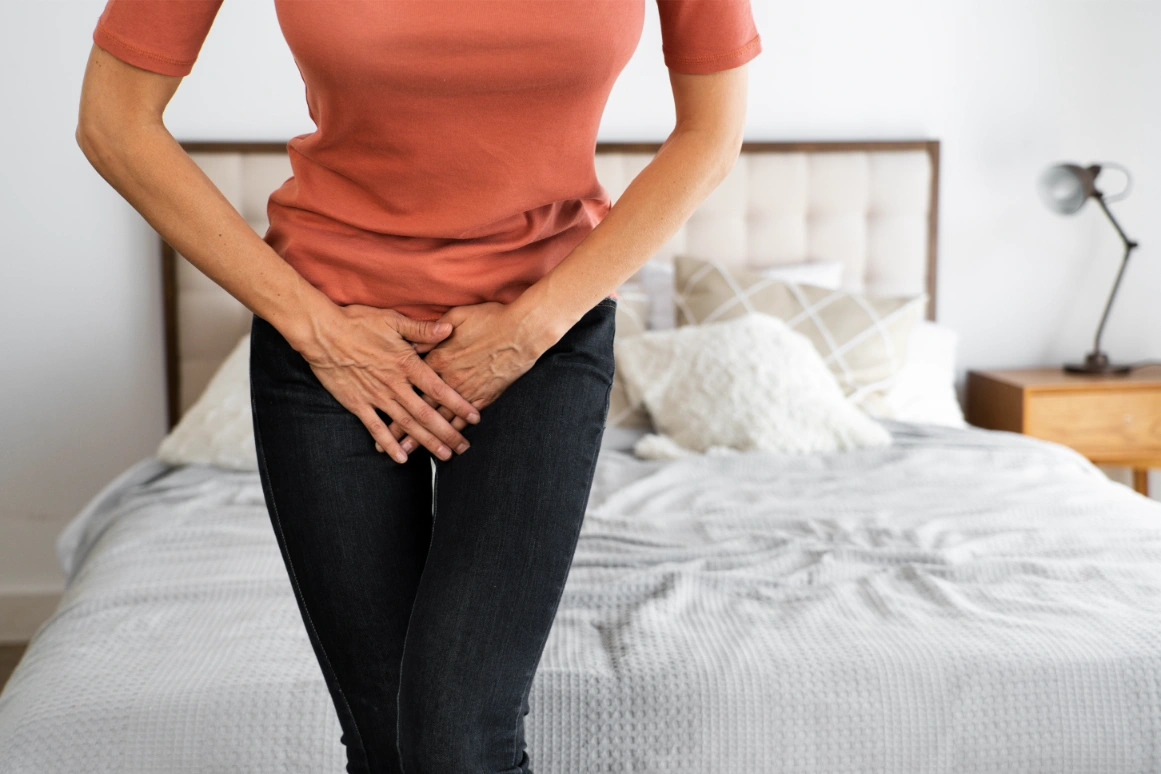
Urinary incontinence in women is characterized by involuntary leakage of urine occurring in various situations (exertion, urgency, or both). These problems can be very bothersome in daily life and affect quality of life, psychological well-being, and social relationships. Fortunately, accurate diagnoses and appropriate treatments are available. It is essential to consult a urologist as soon as these symptoms appear to limit the progression of the condition and choose the best treatment strategy.
What is female urinary incontinence?
Urinary incontinence refers to the involuntary loss of urine, uncontrollable by the individual, outside of any normal voluntary urination. In women, there are essentially three forms:
- Stress incontinence – leakage during coughing, exertion, or sports
- Urge incontinence – sudden, strong urges to urinate that are difficult to control
- Mixed incontinence – a combination of stress incontinence and urge incontinence
These forms can vary in severity, frequency, and impact on daily life. Some key figures:
- Urinary incontinence affects a significant percentage of women, particularly after pregnancy, menopause, or in connection with pelvic risk factors.
- Many women don’t dare to talk about it, thus delaying treatment.
Forms of incontinence and their mechanisms
1️⃣ Stress incontinence (sports, coughing, sneezing)
This condition occurs when intra-abdominal pressure increases (e.g., during exertion, coughing, sneezing, or exercise) and the urethral sphincter cannot withstand the pressure. This indicates a weakness in the perineal support system , a pelvic floor deficiency, or a weakening of the urethral sphincter itself. Contributing factors:
- Childbirth (including episiotomy or tearing)
- Premature pelvic floor
- Menopause (hormonal drop, tissue atrophy)
- Obesity, chronic constipation
- Previous pelvic surgeries
2⃣ Urinary urgency and pressing needs
In this form, the bladder contracts involuntarily (bladder instability) during the filling phase, causing a sudden and urgent need to urinate. If the person cannot reach the toilet in time, leakage occurs. Typical mechanisms include overactive bladder, bladder irritability, neurological abnormalities, or bladder emptying disorders.
3⃣ Mixed incontinence (stress + urge)
Mixed incontinence combines stress and urge mechanisms. A woman may experience leakage during exertion and sudden, strong urges. In many cases, this is the most common form, where both mechanisms coexist.
Expertise
Expertise in urinary incontinence in women
Symptoms and impact
Diagnosis
Possible treatments
Experience
Female urinary incontinence: are dermal fillers a recent solution? | Prof. Haab
Why consult Professor Haab?
Patient Journey
Each patient benefits from personalized support, from the initial consultation to post-treatment follow-up. The process includes a thorough assessment, a clear presentation of the various treatment options, and a gradual approach tailored to each individual’s situation.
Do you suffer from urinary incontinence?
Don’t let urinary incontinence impact your well-being and intimate life. Professor François Haab practices in Paris and supports you at every stage of your journey, with scientific rigor and compassionate care. Urology Clinic Paris Opéra – Paris 17th Arrondissement. In-person or teleconsultation available. Book your appointment today.
FAQ – Frequently Asked Questions
What are the different types of incontinence in women?
There are two main types of incontinence: stress incontinence (leakage when coughing, exercising, or lifting heavy objects), urge incontinence (a sudden, strong urge to urinate that cannot be controlled), and mixed incontinence, which combines both mechanisms. Treatment varies depending on the type.
Is perineal rehabilitation effective?
Yes, it’s the first-line treatment: it improves or cures more than half of mild to moderate stress incontinence cases. Performed with a specialized physiotherapist or midwife, it requires regularity for lasting results.
What treatments are available if rehabilitation fails?
For stress incontinence: a suburethral sling (TOT/TVT) or bulking agents. For urgency: medication, tibial nerve stimulation, sacral neuromodulation, or Botox injections into the bladder. An evaluation will determine the best option.
Is incontinence inevitable with age?
No. Incontinence is never “normal,” even after age 70. Effective solutions exist at any age and can transform quality of life. Don’t hesitate to discuss it during a consultation.
Pr François Haab's expertise
Chirurgien Urologue à Paris

Urinary incontinence in women: there are solutions.