
My operations / Block videos
The videos below present surgical procedures performed by Prof. François Haab, a renowned specialist in functional urology and incontinence surgery. Their aim is to inform patients and make surgery easier to understand.
⚠️ Important warning
These videos show real, uncensored operating images. They may be difficult for sensitive persons.
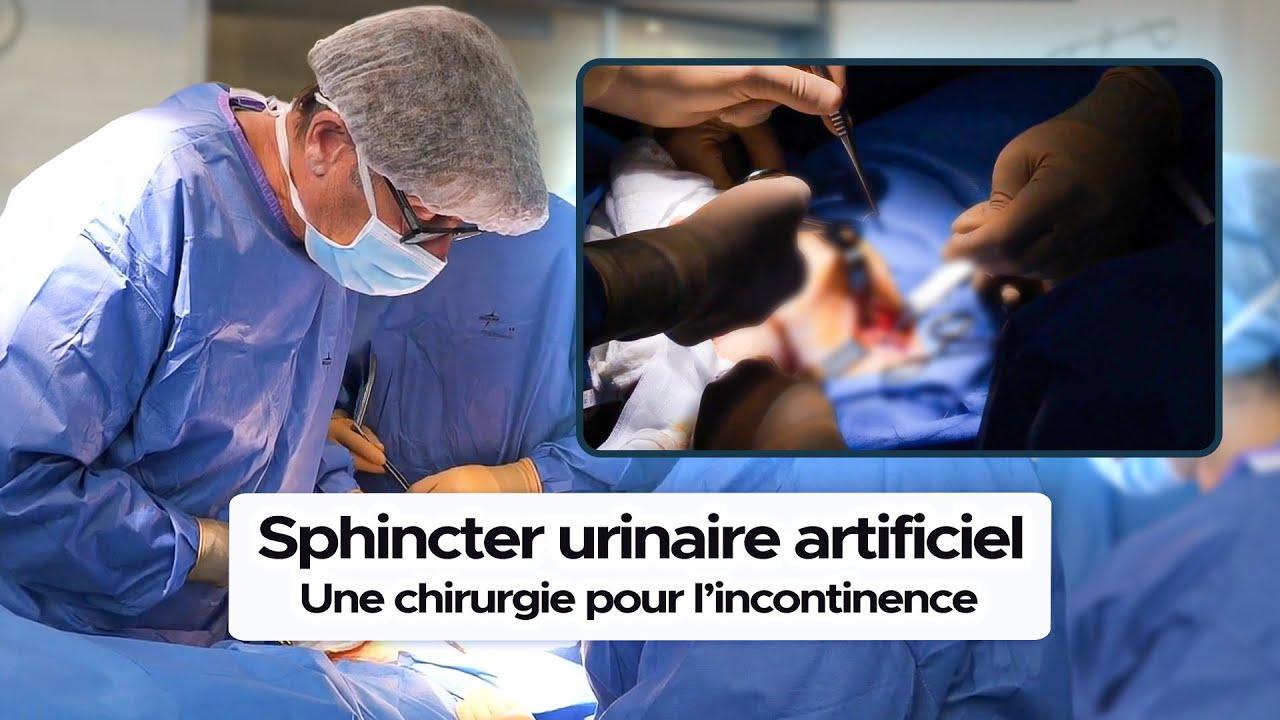
Artificial Urinary Sphincter: Restoring Male Continence
FAQ - Artificial Urinary Sphincter
What are the main indications?
- Severe urinary incontinence after prostatectomy
- Persistent incontinence despite rehabilitation and medical treatment
- Daily leakage requiring permanent protection
- Disabling disorders affecting social or intimate life
How does the artificial sphincter work?
It has three components:
- A cuff around the urethra → inflates to close the urethra
- A balloon regulator → automatic pressure control
- A small pump in the scrotum → allows you to urinate by squeezing it
It’s a reliable, invisible, self-contained mechanism.
How long does the procedure last?
Approximately 1h to 1h30, generally in short hospital stays (24-48 h).
What are the expected results?
- 85-90% significant improvement
- Major reduction in protection
- Resumption of a normal social life
- Very positive impact on quality of life
Are there any risks or limits?
Like all implantable devices:
- Implant infection
- Urethral erosion (rare)
- Mechanical malfunction after several years
- Need for revision over time (10-15 years)
Can you resume sport, work and sexuality?

Urogenital Prolapse Surgery: Vaginal Correction
Urogenital prolapse (organ descent) results from relaxation of the perineum and supporting tissues. It may involve the bladder (cystocele), uterus (hysterocele) or rectum (rectocele).
This surgery, performed vaginally, aims to restore the organs to their natural position and correct troublesome symptoms (heaviness, vaginal ball, leakage).
FAQ - Urogenital prolapse surgery
What symptoms are corrected by this surgery?
- Sensation of a ball in the vagina
- Pelvic heaviness
Discomfort standing up or at the end of the day - Associated urinary incontinence
- Intimate pain or discomfort
- Difficulty urinating or constipation due to prolapse
How does the procedure work?
- Performed vaginally, without external scarring
- Performed under general or locoregional anesthesia
- 45 minutes to 1 h 15 depending on the case
- Minimally invasive procedure with generally moderate bleeding
What techniques are available?
- Anterior vaginal plasty to correct cystocele (bladder)
- Posterior vaginal plasty to treat rectocele
- Suspension or ligament fixation of the uterus or vaginal dome
- Vaginal hysterectomy if indicated by patient’s age and plans
What results can we expect?
- Lasting correction of organ descent
- Disappearance of vaginal discomfort and lumpiness
- Frequent improvement in associated urinary disorders
- Quick return to daily activities with greater comfort
Are there any risks?
- Risk of local infection or vaginal scarring
- Hematoma or transient pelvic pain
- Risk of prolapse recurrence in the medium or long term
- Vaginal dryness or discomfort if menopause not treated
- Rare complications requiring reintervention
When can I resume normal activity?
- Resumption of daily life within 48 to 72 hours
- Moving and walking allowed quickly
- Light sport possible after about 4 weeks
- Resumption of sexual activity usually after 6 weeks, on medical advice
Recognized specialist in functional urology and minimally invasive surgery
✔ 25 years of incontinence and prolapse experience
✔ Modern, secure techniques
✔ Modern, secure techniques
✔ Personalized approach, shared decisions
Make an appointment
Pr Haab welcomes you to Paris for a comprehensive opinion, a precise diagnosis and customized support.