
Surgery for urogenital prolapse (organ descent)
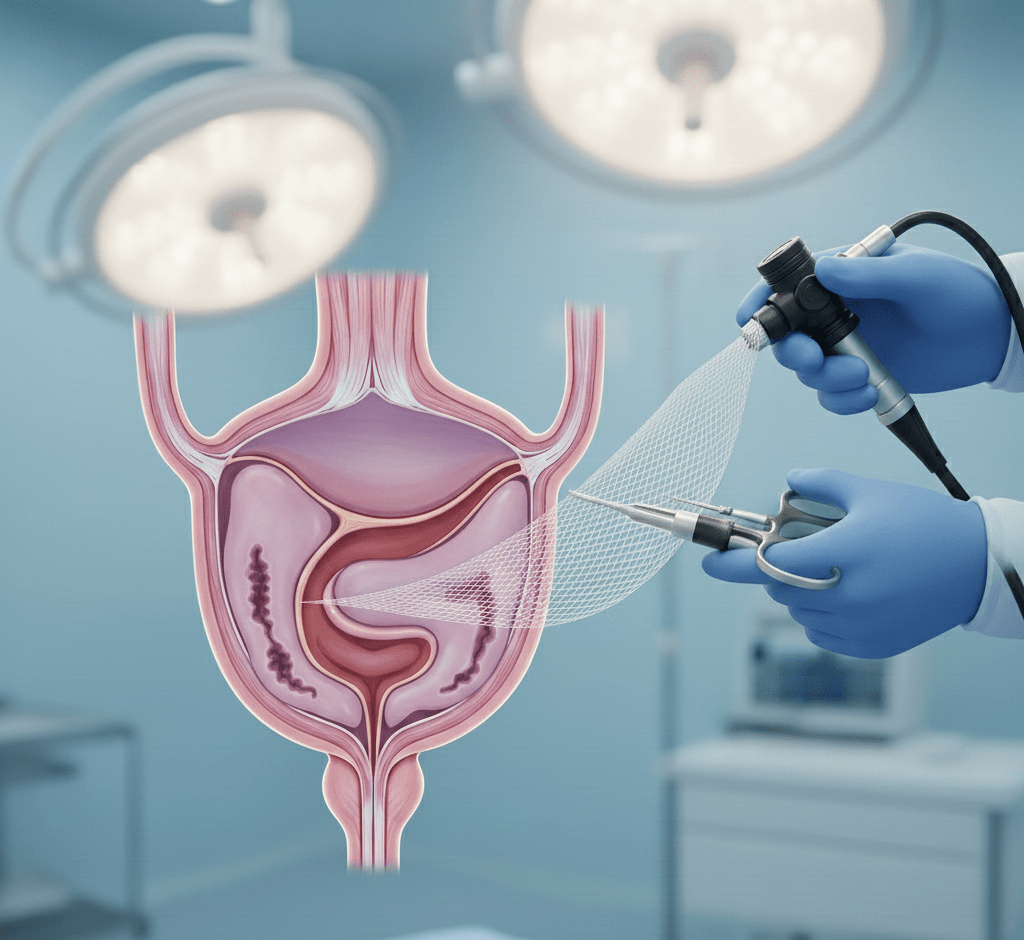
What is prolapse surgery?
Urogenital prolapse is the descent of the bladder, uterus, vagina or rectum into the pelvis.
Surgery aims to return the organ to its natural position, restore pelvic floor support and relieve symptoms.
📌 The aim is to improve quality of life, reduce perineal discomfort, treat associated urinary disorders and prevent aggravation.

In which cases?
Indications
Surgery is considered when a woman presents :
✔️ Significant daily discomfort (heaviness, “lump”, pain, sexual discomfort)
✔️ Associated urinary disorders: leakage, difficulty urinating, frequent urination
✔️ Failure of pessary or rehabilitation
✔️ Moderate to severe prolapse confirmed by clinical examination
✔️ Discomfort affecting mobility, activities or intimate life
📌 Treatment is personalized according to age, expectations, physical activity, history and type of prolapse.
Surgical technique
1️⃣ Pre-operative preparation
- Detailed clinical examination to locate and measure prolapse
- Pelvic floor assessment and screening for hidden incontinence
- Urinalysis to rule out infection
- Anaesthetic consultation (local, locoregional or general depending on the case)
2️⃣ Choice of technique
🔹 Vaginal route
- Preferred technique for many patients
- Direct access to prolapse without abdominal scarring
- Vaginal tissue reinforcement with sutures or autologous tissue
🔹 Laparoscopic / robot-assisted approach (promontofixation)
- Minimally invasive procedure using small incisions
- Long-term suspension of the organ in the sacral promontory
- Excellent long-term results and rapid recovery
🔹 Techniques according to the organ concerned
- Cystocele (bladder): repair of the anterior wall
- Hysterocele (uterus): suspension of uterus or hysterectomy if indicated
- Rectocele: posterior wall repair
- Enterocele: repositioning the intestinal loops
📌 The choice depends on the type of prolapse, age, history and desire to preserve the uterus.
3️⃣ Duration, hospitalization and follow-up
- Duration: 30 to 90 minutes, depending on technique
- Hospitalization: outpatient or 24h
- Resumption of normal activities: 3 to 7 days
- Full recovery: 4 to 6 weeks
- Avoid carrying heavy loads and intensive exertion for one month
Advantages of minimally invasive surgery
✔️ Minimally invasive surgery with minimal pain and rapid recovery, enabling a rapid return to activity.
✔️ Lasting results thanks to strong pelvic organ support and a clear improvement in quality of life.
✔️ Modern techniques enabling minimal scarring and a reduced risk of post-operative complications.
Alternatives or associated gestures
✔️ Targeted perineal re-education (pelvic floor strengthening)
✔️ Vaginal pessary to avoid or delay surgery
✔️ Treatment of associated urinary disorders (leakage, urgency)
✔️ Incontinence surgery performed at the same time if necessary
Risks and limits
- Temporary urinary retention or difficulty urinating
- Urinary, vaginal or scar infections
- Perineal discomfort, vaginal pain or thigh pain depending on technique
- Risk of recurrence varies according to individual factors
- Rare: exposure or erosion of a reinforcement, vaginal or sexual complications
📌 Post-operative monitoring helps prevent and detect these complications early.
Specialist in urogenital prolapse and minimally invasive surgery
Prof. Haab assures:
✔️ A precise assessment of the type of prolapse and its repercussions
✔️ Expertise in modern techniques (vaginal, laparoscopy, robotics)
✔️ A personalized approach tailored to each patient
✔️ Careful monitoring and shared treatment decisions
My video review
Find out more about prolapse surgery and the options available.
Make an appointment
I welcome you to my office in Paris to discuss your expectations and propose the most appropriate solution.