
Surgery for urogenital prolapse (descent of organs)
Correcting pelvic organ prolapse and restoring pelvic comfort
Urogenital prolapse surgery: discover Professor François Haab’s minimally invasive techniques to correct organ descent, relieve discomfort and sustainably improve quality of life.
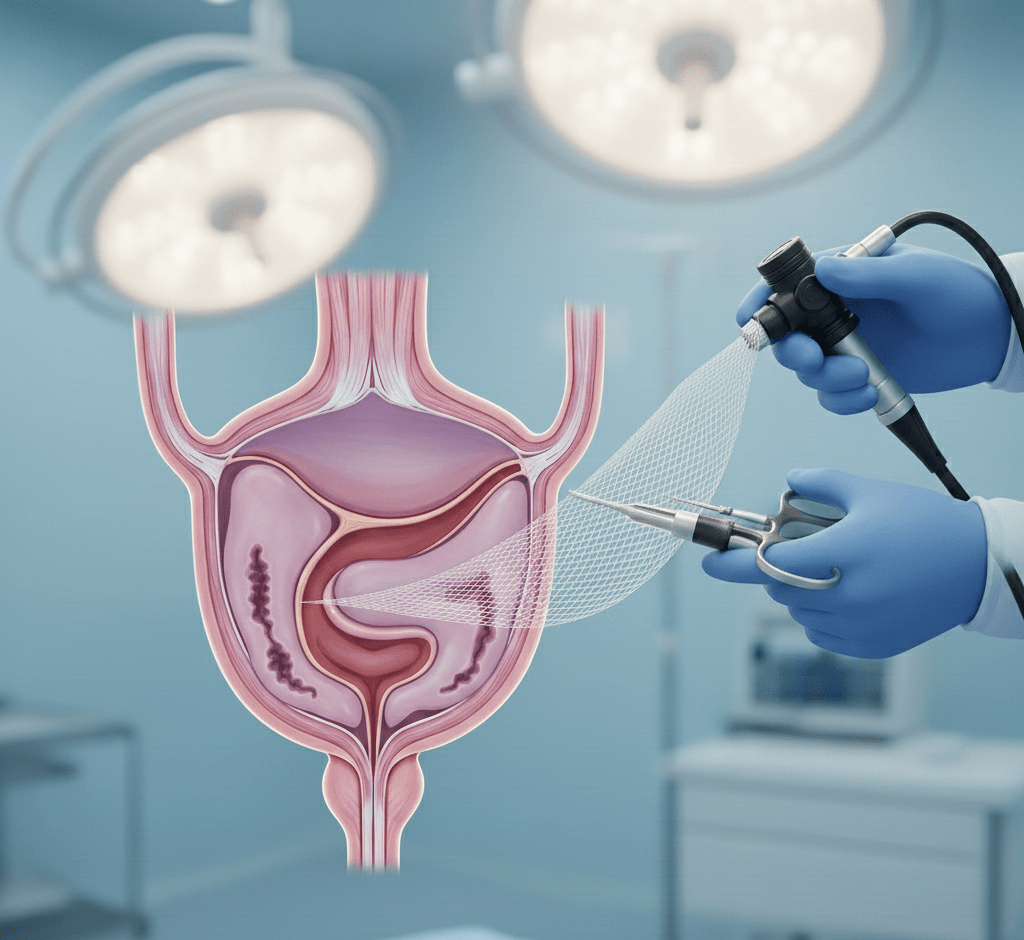
What does prolapse surgery involve?
Urogenital prolapse occurs when the bladder, uterus, vagina, or rectum descends into the pelvis. Surgery aims to reposition the organ , restore pelvic floor support, and alleviate symptoms. The goal is to improve quality of life , reduce perineal discomfort, treat associated urinary problems, and prevent the condition from worsening.

In what cases?
Indications Surgery is considered when a woman presents: Significant daily discomfort (heaviness, “lump”, pain, sexual discomfort) Associated urinary problems: leakage, difficulty urinating, frequent urination Failure of pessary or rehabilitation Moderate to severe prolapse confirmed by clinical examination Discomfort impacting mobility, activities or intimate life Treatment is personalized according to age, expectations, physical activity, history and type of prolapse.
Surgical technique 1. Pre-operative preparation
- Detailed clinical examination to locate and measure the prolapse
- Pelvic floor assessment and screening for hidden incontinence
- Urine analysis to rule out infection
- Anesthetic consultation (local, regional or general depending on the case)
2. Choice of technique: Vaginal route
- A preferred technique for many patients
- Direct access to the prolapse without abdominal scarring
- Reinforcement of vaginal tissues using sutures or autologous tissue
Laparoscopic/robot-assisted approach (sprungofixation)
- Minimally invasive procedure through small incisions
- Durable suspension of the organ at the level of the sacral promontory
- Excellent long-term results and rapid recovery
Techniques according to the organ concerned
- Cystocele (bladder) : repair of the anterior wall
- Hysterocele (uterus) : uterine suspension or hysterectomy if indicated
- Rectocele : repair of the posterior abdominal wall
- Enterocele : repositioning of intestinal loops
The choice depends on the type of prolapse, age, medical history, and the desire to preserve the uterus. 3. Duration, hospitalization, and follow-up
-
- Duration: 30 to 90 minutes , depending on the technique
- Hospitalization: outpatient or 24 hours
- Resumption of normal activities: 3 to 7 days
- Full recovery: 4 to 6 weeks
- Avoid heavy lifting and strenuous activity for one month.
Advantages of minimally invasive surgery
Specialist in urogenital prolapse and minimally invasive surgery
My review in video
Discover my presentation on prolapse surgery and the available options.
Area of expertise
Surgery for urogenital prolapse (descent of organs)
 My review in videoPr François Haab
My review in video
FAQ – Frequently Asked Questions
What is a genital prolapse?
Prolapse, or “descent of organs,” occurs when one or more pelvic organs (bladder, uterus, rectum) slide downwards through the vagina due to a weakening of the supporting tissues. Symptoms include a feeling of a vaginal bulge, heaviness, or urinary problems.
Is surgery always necessary for a prolapse?
No. A minor prolapse can often be monitored. Pelvic floor exercises and pessaries are effective non-surgical alternatives. Surgery is only recommended when the discomfort warrants it.
What are the surgical techniques?
Laparoscopic sacrocolpopexy, which secures the organs to the sacral promontory using a prosthesis, is the standard technique for active women. Vaginal surgery, using natural tissue, is preferred in certain situations. The choice is tailored to each patient.
Can the prolapse recur after the procedure?
The risk of recurrence exists but remains moderate: around 5 to 10% after sacrocolpopexy. Maintaining a stable weight, preventing constipation, and avoiding repeated straining help to protect the outcome.
Pr François Haab's expertise
Chirurgien Urologue à Paris

Surgery for urogenital prolapse (descent of organs): there are solutions.